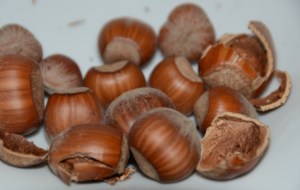
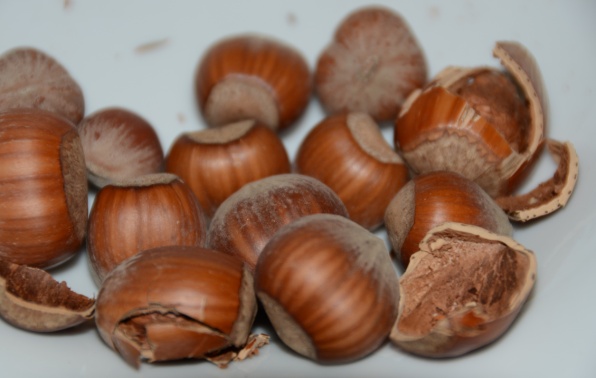
 Hazelnut is a product frequently consumed as part of our Mediterranean diet. Direct consumption is common, but hazelnuts are also consumed as food ingredient in a wide variety of products (chocolates, ice-creams, cocoa & hazelnut spreads, cakes, pastries and cookies, and even in meat products) or for cooking preparation (salads, gravies, etc.). This diversity of applications is due to their particular sensory properties, very appreciated by the consumer. But it is also important to take into account its nutritive value, fact that justifies its consumption according to international recommendations and dietary guides. Hazelnut nutritional value must be focused first on its energetic value (about 120 kcal/20 grams portion), which is mainly due to the high fat % of this nut (50-65%). However, it is also remarkable its good supply of other nutrients, such as 6% carbohydrates and 14% proteins. A 20 grams portion also provides 1,6 grams of dietary fibre, and relevant amounts of some vitamins and mineral elements: 8% vitamin B1 RDA; 7% folic acid RDA; 10% magnesium RDA (RDA, recommended dietary allowances).
But we would like to focus the attention in the fat fraction of hazelnut, since it is a major component and supplies a high amount of some fatty acids that are relevant for human nutrition and health. Hazelnuts from Catalonia (one of the major producer regions in the world) show a mean value of 60% fat, being the main part unsaturated fatty acids. From the total fatty acid fraction, 78% are monounsaturated, 14% polyunsaturated and only 7,5% saturated. According to the EU regulations (1, 2), these fatty acid values allow stating some “nutrition” and “health” claims. Possible “nutrition claims” for these hazelnuts would be: 1) High monounsaturated fat; and 2) High unsaturated fat. Accordingly, possible “Health claims” would be: Replacing saturated fats with unsaturated fats in the diet contributes to the maintenance of normal blood cholesterol levels (monounsaturated and polyunsaturated fatty acids are unsaturated fats).
As for the other plant oils and fats, there is a certain variability affecting the % total fat in the hazelnuts, as well as its fatty acid composition. This variability is mainly depending on the productive factors. Several studies carried out by our research group show that the factors related to the geographical origin of hazelnut (environmental and growing conditions) have a significant effect on hazelnut fatty acid composition while the cultivar has much less effect (3, 4). In contrast, some other components of fat, such as alpha-tocopherol (vitamin E, 30-47 mg alpha-tocopherol/100 g oil) have little variability due to the cultivar or the geographical origin. Moreover, we found that the harvest year has a huge influence in almost all these composition factors.
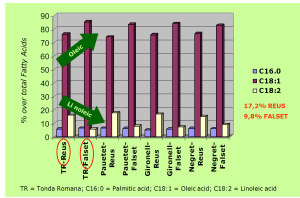 The figure below shows the fatty acid composition (Palmitic, Oleic and Linoleic acids) of 4 hazelnut cultivars (Tonda Romana, Pauetet, Gironell and Negret). It can be seen that those growing in a mountain area (Falset) show always a higher % oleic acid and lower % linoleic acid compared to those growing in the near to the sea (Reus),regardless to the cultivar. Mean value for % linoleic acid (including the four cultivars) was 9,8% in Falset and 17,2% in Reus. In contrast, no significant differences were found between the values of the four cultivars cultivated in the same geographical area.
By Prof Rafael Codony
LITERATURE
1-COMMISSION REGULATION (EU) No 116/2010 of 9 February 2010 modifying REGULATION (EC) No 1924/2006 OF THE EUROPEAN PARLIAMENT AND OF THE COUNCIL of 20 December 2006 on nutrition and health claims made on foods.
2-COMMISSION REGULATION (EU) No 432/2012 of 16 May 2012 establishing a list of permitted health claims made on foods, other than those referring to the reduction of disease risk and to children’s development and health.
3-Parcerisa, J.; Boatella, J.; Codony, R.; Farran, A.; García, J.; López, A.; Rafecas, M.; Romero, A. Influence of variety and geographical origin on the lipid fraction of hazelnuts (Coryllus avellana L.) from Spain: I. Fatty acid composition . Food Chemistry 48, 411-414. 1993.
4-Parcerisa, J.; Boatella, J.; Codony, R.; Rafecas, M.; Castellote, A.; García, J.; López, A.; Romero, A. Comparison of fatty acid and Triacylglycerol compositions of different Hazelnut varieties (Corylus avellana L.) cultivated in Catalonia (Spain) . Journal of Agricultural and Food Chemistry 43, 13-16. 1995.
M'agrada S'està carregant...


 We are at the Food Integrity Conference 2017, in Parma, Italy (May, 9-10th, 2017). We are presenting our latest results on our
  We are at the


 Within our research area on

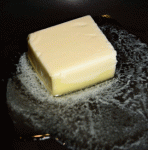
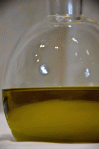 The term “fat” refers to the substances formed by 100% liposoluble materials (not water soluble materials) and that have a semi solid aspect at room temperature (20ºC), such as lard or cocoa butter. Instead, the term “oil” includes those materials which also are completely liposoluble, but are liquid at room temperature, such as olive oil or sunflower.
 LiBiFOOD blog