Bioactive compounds and health

1 Post-doc and 2 PhD positions

Would you like to join our research group? Currently we are searching 1 post-doc and 2 PhD students for different research lines:

  • PhD on Food authenticity: find new analytical strategies to identify authentic foods and prevent food fraud. In this PhD, state-of-the art analytical determinations combined with data processing by chemometrics (fingerprinting/omics) will be applied.  See here text call and application procedure 

(c) alswart – Fotolia

  • PhD on Lipids in animal feeding: study ways of re-valorizing of fat by-products as animal feed ingredients and their effects on meat composition, quality and stability. This PhD is a part of a collaborative project with companies in which new feed ingredients are being developed. See here text call and application procedure
Baby chicken having a meal

© Ljupco Smokovski 2007


Joan Campo, scientific internship at Adisseo

foto noticia

CC BY JoanCampo

Joan Campo, one of our PhD students, is doing an internship at Adisseo France S.A.S. (Commentry, France) for a period of 5 months. This collaboration was possible thanks to  Adisseo building a new cell culture facility at Adisseo Centre of Expertise and Research in Nutrition (CERN) where he is developing his internship. At CERN, Adisseo has experimental facilities allowing the evaluation of animal nutrition which now incorporates studies with cellular cultures.

This insternship has received funding from the Fundació Universitària Agustí Pedro i Pons. 

Enjoy summer drinking tiger nut milk

Tiger nut milk (horchata in Spanish) is a nutritious, refreshing and very healthy product that is obtained from the tigernut, a tuber that was introduced by the Arabs in the 8th century. It is the Mediterranean drink par excellence, being high energetic, and it does not contain alcohol, caffeine, lactose or fructose and has a low sodium content. Thus, it is an ideal drink for the whole family, including children, and especially in substitution of carbonated and sweetened beverages.

  • Tiger nut milk composition

Tiger nut milk has a high content of water and carbohydrates and soluble fiber, and also contains proteins and fats, which are mainly monounsaturated fatty acids and it does not contain cholesterol. In addition, it provides vitamins and it is rich in minerals, such as potassium, calcium, phosphorus, magnesium and zinc (more information in this link).

Because of its composition, tiger nut milk is a drink with many healthy properties, since it has been described that can contribute to a good status of the cardiovascular, immune and  gastrointestinal systems. In this sense, and because of its soluble fiber content, it is considered a drink with prebiotic properties.

  • What is a prebiotic?

A prebiotic is defined as a component of the diet, essentially non-starch polysaccharides and non-digestible oligosaccharides, which is fermented selectively and it produces specific changes in the composition and / or activity of the intestinal microbiota, mainly bifidobacteria and lactobacilli, thus giving beneficial health effects (for information in this link).

One of our research lines focuses on several related bioactive compounds such as prebiotics, intestinal health indicators.

flora batterica intestinale

  • What are the benefits of a healthy microbiota?

The intestinal microbiota digests components of the diet that provide essential nutrients such as vitamins and amino acids; generates short chain fatty acids that inhibit the growth of pathogens and are a source of energy for enterocytes; competes with pathogens for space and nutrients; and improves intestinal barrier function because  stimulates the production of mucus and antimicrobial compounds that regulate epithelial permeability and modulate the immune response (more information available following this link).  

Thus, prebiotics contribute to intestinal health and can therefore help to prevent and treat certain diseases of the digestive system, such as diarrhea, an alteration that is very frequent in summer. In addition, there are studies that report that they can have positive effects on certain systemic diseases such as obesity or anxiety.

And with this fresh recommendation, the LIBIFOOD team wishes you happy summer holidays!!

Article deposited in the UB Digital Deposit. Please, use this identifier to cite it: http://hdl.handle.net/2445/120278
By Ruth Ferrer, PhD , Alba Tres, PhD and Raquel Martin, PhD


We are at the… ESPN 2017

IMG-20170510-WA0014We are at the 21st European Symposium on Poultry Nutrition (8-11 May 2017, Salou, Spain). We are presenting our research on Feed raw materials, on Quality Control and nutritional quality of animal fats, and on Bioactive compounds on poultry nutrition. Meet us!

Fatty thursday, the egg day!

Eggs

Apart from pork , eggs are an important part of many typical meals for today: the Fatty Thursday, first Carnival day. Omelette, eggs, egg sausages… that are consumed not only today but also in our daily life. However, egg consumption is a common subject of discussion among consumers. Some years ago, it was recommended to reduce their intake; later, it was demonstrated that their intake is beneficial for health; and nowadays, there is an increasing tendency to separate white from yolk for their consumption. But… who is right? It is necessary to eat eggs? Do they have positive health effects? Should we avoid consuming egg yolks? Here, we aim at providing scientific and objective answers to these questions.

First of all we have to take into account that the use of eggs, yolk or white, or several by-products, changes according to gastronomic criteria (cooking and eating specifications); dietary criteria (fat or caloric restriction is desired); technological criteria (role of the product as food ingredient); health criteria (patients following dietary restrictions). But in any case we have to differentiate comments and/or recommendations raised for special population groups than those raised for the general population.

Which nutrients are supplied by eggs?

The egg has a very particular structure, constituted by two parts that are easily separable and have very different compositions: the yolk (1/3 of the weight) and the white (2/3). The use of the whole egg is the first option, but in the different cooking preparations and recipes, as well as in industrial uses, yolk and white are separated and treated separately mostly due to technological reasons.

For nutritional reasons is interesting to have a look to the particular composition of yolk and white, separately. This can provide useful information to clarify aspects that have been confusing for consumers. The table below shows the intakes of energy and several nutrients and cholesterol that can be reached by consuming an egg of mean size (50 g). Data are shown separately for white and yolk, so it is easier to differentiate which of both egg parts is the main supplier of each nutrient.
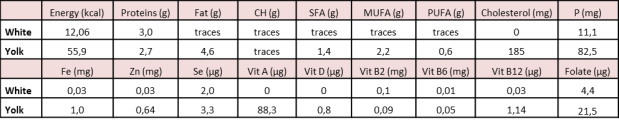
Yolk and white compositiong (grams); µg (micrograms); CH (carbohydrates); SFA (saturated fatty acids); MUFA (monounsaturated fatty acids); PUFA (polyunsaturated fatty acids); P (phosphorus);  Fe (iron); Zn (zinc); Se (selenium) ;

The egg white:

  • Is almost only constituted by water (88%) and proteins
  • it has a null content of fat (cholesterol and unsaturated fatty acids) and carbohydrates.
  • Supplies a low amount of mineral elements and vitamins

The egg yolk:

  • Contains a 55% of water
  • Provides proteins in a similar amount than the egg white
  • For this reason, the egg yolk is much more concentrated in mineral elements, vitamins and cholesterol
  • Provides a substantial amount of fat, which is mainly unsaturated.

Egg yolk or white? Is there a “bad guy”?

Thus, egg white provides a lower amount of mineral elements and vitamins, cholesterol and polyunsaturated fatty acids, that are essential nutrients for humans. In contrast, yolk supplies a similar amount of proteins than white, but it also supplies a significant amount of fat. However, this fat is mainly unsaturated (66% AGMI+AGPI), with a lower proportion of saturated fat (33%). The yolk supply of iron, zinc, selenium, folate and vitamins A, D and B12 is also relevant according to the daily intake recommendations. Summarising, the yolk constitutes a good nutrient concentrate, not only for proteins but also for several micronutrients, giving to this product an important role in our diet. In contrast, the egg white constitutes a good supply of protein but not for the rest of nutrients.

So, what is better to eat? Whole eggs? Egg yolk? Egg white?

The egg is one of the best examples regarding the changes occurring in some foods’ consumption when certain dietary recommendations are published by national or international institutions. Recommendations of lower egg consumption were mainly introduced in the 70-80s, according to several studies that found relationships between a higher cholesterol intake with a higher incidence of hypercholesterolemia and cardiovascular disease. This provoked a quick decrease in the rate of egg consumption in many countries. In spite of the new studies published from the last 80s, that report data confirming that cholesterol intake does not induce hypercholesterolemia when the diet contains adequate intakes of unsaturated fat, egg consumption did not start to raise again until 2000, but a very low rate. (See recommended references).

From all these data we can make the following 10 statements:

1-The consumption of an egg does not imply a high caloric intake. Moreover, it is a quite well balanced product by a predominant presence of protein and a fat supply based mainly on unsaturated fatty acids.

2-Summarising, a portion of 2 mean size eggs would cover the following daily intake recommendations: 6% energy, 20% protein, 12% vit A and D, 30% vit B2, 16% vit B12, 12% vit A, D and folate, 8% iron and 34% selenium.

3-These values support the fact that egg will always be a basic food in our diet, according to its wide coverage of nutrient requirements. The consumption of isolated white is only recommendable in certain cases, taking always into account that a systematic refuse of yolk lead to a lower coverage of our micronutrient supply.

4-The most negative issue related to egg consumption is its high content of cholesterol in the yolk. However, although some decades ago a higher intake of cholesterol was directly related to higher levels of plasma cholesterol, more recent studies demonstrate that other dietary factors (i.e. saturated fats) have a more relevant effect, and that a frequent consumption of eggs did not affect plasma cholesterol in healthy humans.

5-It should be avoided a systematic refuse of yolk and the consumption of white alone for healthy people, that they do not show obesity, hypercholesterolemia or other pathologies demanding certain dietary restrictions.

6-For these people, a moderate consumption of whole eggs could be recommended, although scientific evidences show that even people suffering from these pathologies can eat a variable amount of eggs per week. A complementary strategy could be the “dilution” of the egg with and additional white.

7-People having specific pathologies, and submitted to specific dietary restrictions should always follow the egg consumption pattern established by the doctor or nutritionist.

8-It makes sense for sport people, particularly body-builders, to introduce egg white in their daily diet. But this should be strictly considered as a protein supplement.

9-A total restriction of yolk consumption represents a loss of many micronutrients that are also relevant for covering sport people requirements.

10-So, enjoy a very happy Fatty Thursday eating eggs!

By Dr Rafael Codony

To know something more….

Ingesta de huevo y factores de riesgo cardiovascular en adolescentes; papel de la actividad física. Estudio HELENA. A. Soriano-Maldonado, M. Cuenca-García, L. A. Moreno, M. González-Gross, C. Leclercq,O. Androutsos, E. J. Guerra-Hernández, M. J. Castillo y J. R. Ruiz. Nutr Hosp. 2013. 28(3):868-877.
A prospective study of egg consumption and risk of cardiovascular disease in men and women.Hu, F.B., Stampfer, M.J., Rimm, E.B., Manson, J.E., Ascherio, A., Colditz, G.A., Rosner, B.A., Spiegelman, D., Speizer, F.E., Sacks, F.R., Hennekens, C.H., Willet, W.C. 1999.  JAMA, 281: 1387-1394.
The impact of egg limitations on coronary heart disease risk: do the numbers up? McNamara, D.J. 2000. J. Am. Coll. Ntr. 19 (5): 540S-548S.
Congruence of individual responsiveness to dietary cholesterol and to saturated fat in humans.Katan, M.B., Berns, M.A.M., Glatz, J.F.C., Knuiman, J.T, Nobels, A. y De Vries, J.H.M., 1988. J. Lipid Res., 29: 883-892.

We have been at the International Symposium on Poultry Gut Health

logo

In this Symposium we have presented a communication about:

Effects of nucleotides-enriched yeast extracts on intestinal gut health of broilers  
Brufau, M.T. ; González-Jurado, N.; Pérez-Vendrell, A.M.; D’Inca, R.; Auclair, E.; Vilà, B.; Brufau, J.; Ferrer, R.; Martín-Venegas, R.

Baby chicken having a meal

Nucleotides from diet exert a nutritional role that is key for the development of tissues with a high turnover rate, such as the intestine. In periods of rapid growth, these nutrients can become conditionally essential and the dietary supplementation can benefit the development of the animal. Given the changes that occur in the intestines of broilers after hatching, the objective of the study was to investigate two indicators of intestinal health: microvilli development and goblet cell count in broilers fed 4 diets supplemented with increasing concentrations of nucleotides.

Results show that dietary supplementation of starter feed with nucleotides exerts a beneficial effect on intestinal health by increasing the absorption surface and enhancing the role of mucus in the gut barrier function

This study has been conducted within our research line  Bioactive Compounds and Health, and it is related with our line studying the influence of diet on growth and animal health.

Hazelnuts: nutrition and health claims

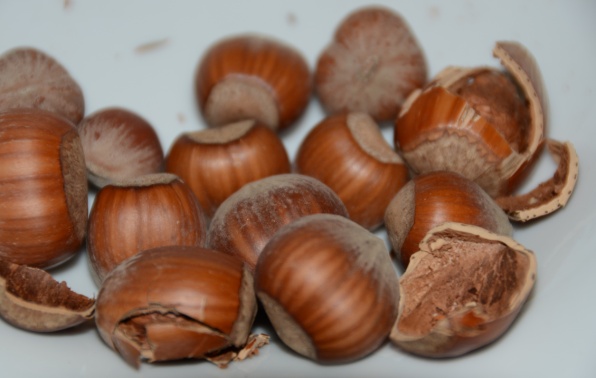
foto catala Hazelnut is a product frequently consumed as part of our Mediterranean diet. Direct consumption is common, but hazelnuts are also consumed as food ingredient in a wide variety of products (chocolates, ice-creams, cocoa & hazelnut spreads, cakes, pastries and cookies, and even in meat products) or for cooking preparation (salads, gravies, etc.). This diversity of applications is due to their particular sensory properties, very appreciated by the consumer.  But it is also important to take into account its nutritive value, fact that justifies its consumption according to international recommendations and dietary guides. Hazelnut nutritional value must be focused first on its energetic value (about 120 kcal/20 grams portion), which is mainly due to the high fat % of this nut (50-65%). However, it is also remarkable its good supply of other nutrients, such as 6% carbohydrates and 14% proteins. A 20 grams portion also provides 1,6 grams of dietary fibre, and relevant amounts of some vitamins and mineral elements: 8% vitamin B1 RDA; 7% folic acid RDA; 10% magnesium RDA (RDA, recommended dietary allowances).

But we would like to focus the attention in the fat fraction of hazelnut, since it is a major component and supplies a high amount of some fatty acids that are relevant for human nutrition and health. Hazelnuts from Catalonia (one of the major producer regions in the world) show a mean value of 60% fat, being the main part unsaturated fatty acids. From the total fatty acid fraction, 78% are monounsaturated, 14% polyunsaturated and only 7,5% saturated. According to the EU regulations (1, 2), these fatty acid values allow stating some “nutrition” and “health” claims. Possible “nutrition claims” for these hazelnuts would be: 1) High monounsaturated fat; and 2) High unsaturated fat. Accordingly, possible “Health claims” would be: Replacing saturated fats with unsaturated fats in the diet contributes to the maintenance of normal blood cholesterol levels (monounsaturated and polyunsaturated fatty acids are unsaturated fats).

As for the other plant oils and fats, there is a certain variability affecting the % total fat in the hazelnuts, as well as its fatty acid composition. This variability is mainly depending on the productive factors. Several studies carried out by our research group show that the factors related to the geographical origin of hazelnut (environmental and growing conditions) have a significant effect on hazelnut fatty acid composition while the cultivar has much less effect (3, 4). In contrast, some other components of fat, such as alpha-tocopherol (vitamin E, 30-47 mg alpha-tocopherol/100 g oil) have little variability due to the cultivar or the geographical origin. Moreover, we found that the harvest year has a huge influence in almost all these composition factors.

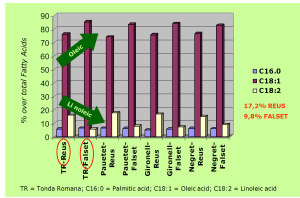
grafic avellanes engThe figure below shows the fatty acid composition (Palmitic, Oleic and Linoleic acids) of 4 hazelnut cultivars (Tonda Romana, Pauetet, Gironell and Negret). It can be seen that those growing in a mountain area (Falset) show always a higher % oleic acid and lower % linoleic acid compared to those growing in the near to the sea (Reus),regardless to the cultivar. Mean value for % linoleic acid (including the four cultivars) was 9,8% in Falset and 17,2% in Reus. In contrast, no significant differences were found between the values of the four cultivars cultivated in the same geographical area.

By Prof Rafael Codony

LITERATURE

1-COMMISSION REGULATION (EU) No 116/2010 of 9 February 2010 modifying REGULATION (EC) No 1924/2006 OF THE EUROPEAN PARLIAMENT AND OF THE COUNCIL of 20 December 2006 on nutrition and health claims made on foods.

2-COMMISSION REGULATION (EU) No 432/2012 of 16 May 2012 establishing a list of permitted health claims made on foods, other than those referring to the reduction of disease risk and to children’s development and health.

3-Parcerisa, J.; Boatella, J.; Codony, R.; Farran, A.; García, J.; López, A.; Rafecas, M.; Romero, A. Influence of variety and geographical origin on the lipid fraction of hazelnuts (Coryllus avellana L.) from Spain: I. Fatty acid composition . Food Chemistry 48, 411-414. 1993.

4-Parcerisa, J.; Boatella, J.; Codony, R.; Rafecas, M.; Castellote, A.; García, J.; López, A.; Romero, A. Comparison of fatty acid and Triacylglycerol compositions of different Hazelnut varieties (Corylus avellana L.) cultivated in Catalonia (Spain) . Journal of Agricultural and Food Chemistry  43, 13-16. 1995.

Carnival starts with the “Fatty Thursday”

Another year comes the “Fatty Thursday” (known as “Dijous Gras” in catalan, or “Jueves Lardero” in Spanish), a gastronomic day in honor of the “fat” that announces the start of carnival before Lent, a period traditionally characterized by restricting the consumption of meat products and the practice of fasting . Typical meals in Catalonia for today include Bean-Omelette, “Egg-sausage” and “Lardon Pastry”.
To celebrate this day, we propose a reflection on the consumption of animal fats and their role in our diet.

Role of animal fats in our diet

In general, animal fats are considered as unhealthy. The main result is the recommendation to minimize their consumption. As with all dietary issues, it is never a good idea to generalize and take recommendations to the extreme. It is always a good practice to improve consumer knowledge, providing tools to allow them making their own decisions. This can lead them to a more diversified diet, avoiding radical exclusion of foods with a valuable nutritional value.

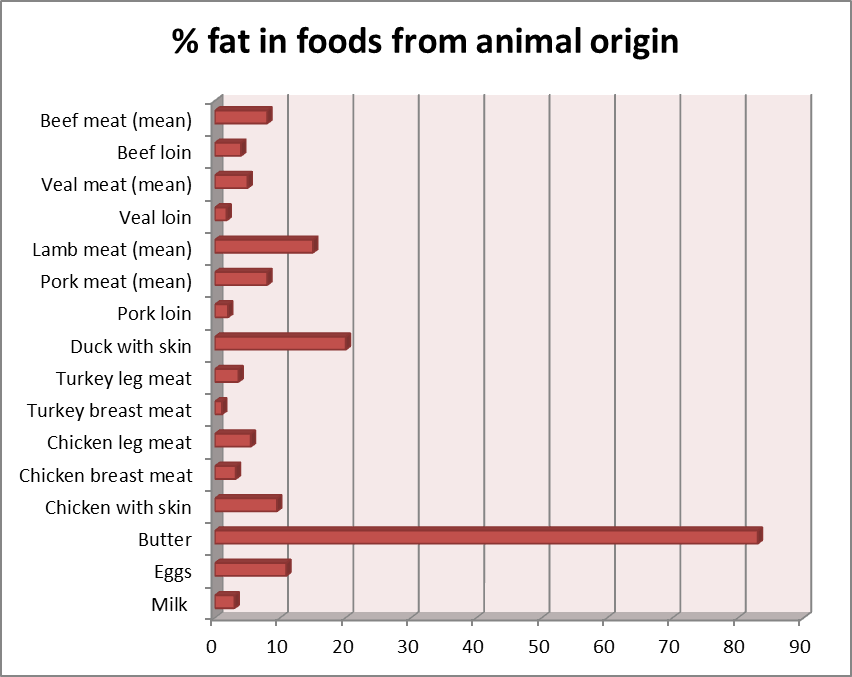
fat food animal originIf we simplify, we could say (with some exceptions) that vegetable oils have a fatty acid composition less “saturated” than animal fats which makes them healthier. But in practice this is not very useful for the consumer as few animal fats (butter being perhaps one of the few exceptions) are directly consumed. The problem is that when we reduce the consumption of animal fats, in most cases it can only be achieved if we significantly diminish or eliminate meat, poultry, eggs, milk, cheese and other dairy products from our diet. Obviously, we must set aside fish oil since it is highly unsaturated which makes its consumption highly recommendable (we will discuss this topic in future articles).

Therefore, the first overall conclusion is that the consumer must know which is the minimum percentage of total fat in foods (see chart included in this article), because a first recommendation is always to reduce the total consumption of fat in our diet.

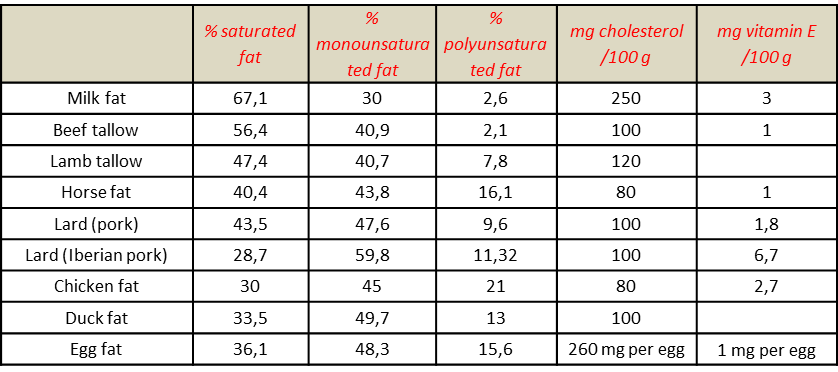
animal fat compositionBut apart of the amount of fat, it is also interesting to know the contents of the main lipid compounds of nutritional interest, mainly the % of saturated and polyunsaturated fatty acids, cholesterol or mg of vitamin A, D and E. Recently, the EU has supported this need, introducing the obligation to include basic nutritional information in food labels, although the lipid composition is not always complete. The table included in this article shows how in many cases, the composition of the fats found in animal foods includes a good proportion of monounsaturated fatty acids (pork, egg, chicken or duck) and a considerable proportion of polyunsaturated fatty acids (chicken, horse, egg). We can also see how feed can significantly change the fat composition of animal products. An example is the comparison of the proportions of saturated, mono and polyunsaturated fats in pork from animals fed compound feed or in those fed with acorns. In this respect, it is worth to mention the developments in animal feeding conducted during the lasts years such as the modification of the lipid composition in animal products, especially enriching their omega-3 fatty acid content (such as EPA, DHA). The presence of these products in the market can lead to recommendations to increase their consumption (i.e. chicken and eggs rich in omega-3).

A second nutritional reason that stands up for a more accurate recommendations on the consumption of animal fat (and thus animal products) is that decreasing their consumption might imply a reduction of the intake of high-quality protein, many vitamins (lipo- and hydro-soluble) and mineral elements such as iron and zinc.

Obviously, these comments refer to the healthy consumer and not to those that require specific dietary restrictions, either with respect to total fat consumption or to some of its components. In any case, to introduce the idea that consumers are responsible of their own diets, and that they can modulate it within some ranges is more educational and useful than setting excessive restrictions. This may facilitate that consumers follow balanced diets that are less monotonous, without feeling that they are following an imposed diet.

By Prof Rafael Codony

We are at…. VI Workshop Probióticos, Prebióticos y Salud: Evidencia Científica

Today we are at the…..
SEPyP “VI Workshop Probióticos, Prebióticos y Salud: Evidencia Científica” (Workshop on Probiotics, Prebiotics and health: Scientific evidence” organized by the “Sociedad Española de Probióticos y Prebióticos (SEPyP) (Spanish Society for Probiotics and Prebiotics) in Oviedo (Spain) on February 5th-6th, 2015.