Our article
 “Vegetable re-esterified oils in diets for rainbow trout: effects on fatty acid digestibility”
by C Trullas, R Fontanillas, A Tres and R Sala,
has been published by the journal Aquaculture 2015, 444: 28-35. DOI: 10.1016/j.aquaculture.2015.03.018
This research article is a part of our project on the “Valorization of fat by-products as animal feed ingredients” that we are carrying out within our research line “Fats in animal feeding”.
Concretely, here we are valorizing acid oils (by-products from refining of edible oils) as feed ingredients. However, their absorption by the animals (digestibility) is usually low because of their high free fatty acid content that are poorly absorbed. Indeed, digestibility is even lower when they are originated from saturated fats such as palm oil. In this project we deal with novel technical fats (re-esterified oils) that are produced by the chemical re-esterification of acid oils and glycerol (a by-product of the biodiesel industry) in order to reduce the free fatty acid content of acid oils. We use them as ingredients in feeds formulated for various species (chicken, pig, fish) and we evaluate their effects on digestibility, productive parameters and on the composition of animal products for human consumption (i.e. meat).

Concretely, in the part of the study covered by this research article, two types of these new technical fats have been used in rainbow trout feed: one produced from palm acid oil, and a second one produced from rapeseed acid oil. The aim was to study their effects on feed digestibility in rainbow trout which is one of the most common species in aquaculture.

As it is explained in the article, re-esterified oils led to an improvement of fatty acid digestibility with respect to the use of acid oils. Digestibility values are similar to those obtained when the corresponding native oils were used (palm or rapeseed). This implies that both re-esterified oils might be used as fat ingredient in feed. But before recommending their use we are nowadays studying their effects on growth and animal metabolism, as well as on filet composition.
This project has been a collaboration of our research group and the Animal Science Department of the UAB, and the companies (Skretting ARC (Skretting Aquaculture Research Center, Stavanger, Norway) and SILO S.p.a (Florence, Italy) and is a part of the PhD Thesis of Clara Trullàs. It has been funded by the Spanish Ministry of Economy and Competitiveness (project AGL2010-22008-C02, and PhD grant BES-2011-046806), and by the post-doctoral program Beatriu de Pinós (2011BP_B 00113) of the Catalan Government and the COFUND Program of Marie Curie Actions within the 7th Framework Programme of the European Union.








 Thank you “Ratolins-Mice” Class, it has been a great experience for us too!

 We are at the
  Are you a PhD researcher willing to apply for an
  Sure we all have referred on occasion to the
  This article belongs to a study on the valorization of by-products of the industry as feed ingredients.
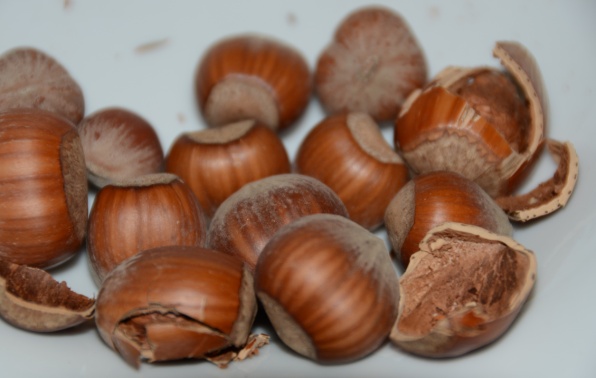
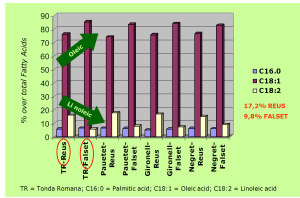 The figure below shows the fatty acid composition (Palmitic, Oleic and Linoleic acids) of 4 hazelnut cultivars (Tonda Romana, Pauetet, Gironell and Negret). It can be seen that those growing in a mountain area (Falset) show always a higher % oleic acid and lower % linoleic acid compared to those growing in the near to the sea (Reus),regardless to the cultivar. Mean value for % linoleic acid (including the four cultivars) was 9,8% in Falset and 17,2% in Reus. In contrast, no significant differences were found between the values of the four cultivars cultivated in the same geographical area.
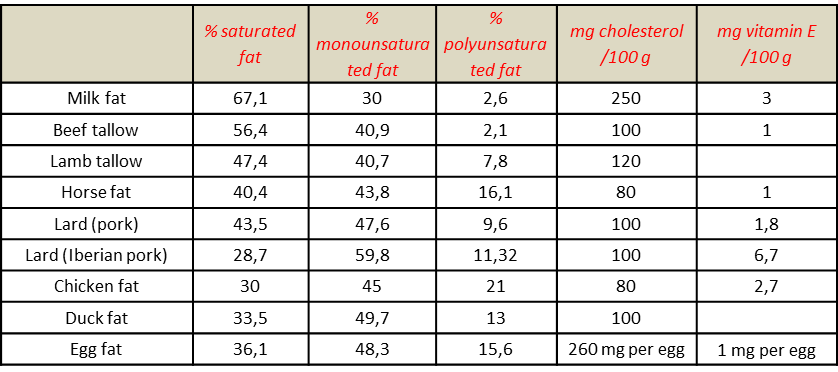
 Another year comes the “Fatty Thursday” (known as “Dijous Gras” in catalan, or “Jueves Lardero” in Spanish), a gastronomic day in honor of the “fat” that announces the start of carnival before Lent, a period traditionally characterized by restricting the consumption of meat products and the practice of fasting . Typical meals in Catalonia for today include Bean-Omelette, “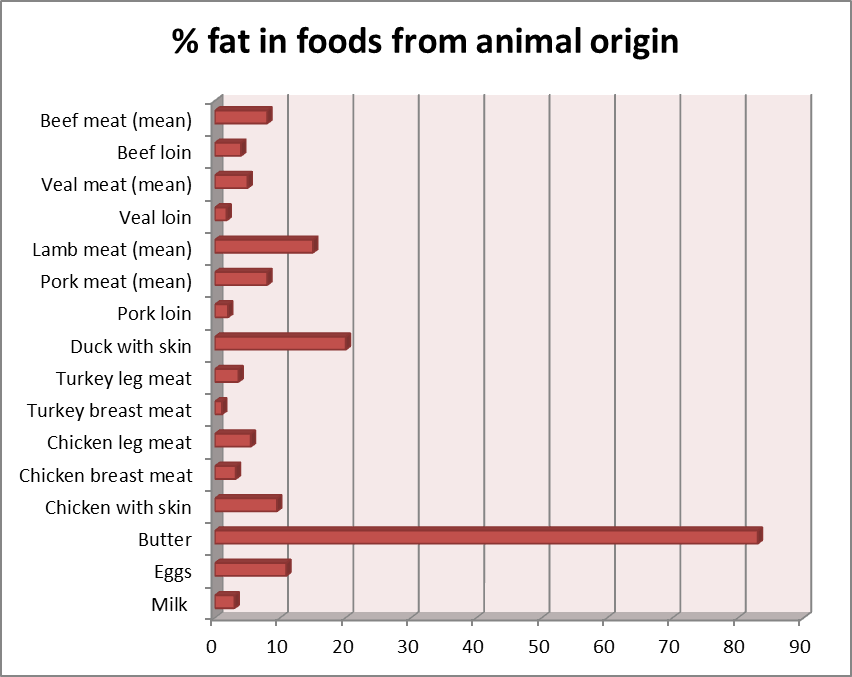
 “
“ LiBiFOOD blog